
Cashews rarely move in a straight line. The supply chain runs across continents, and the market is shaped as much by processing economics and trade routes as by the size of the crop. In 2026, the tone is cautiously constructive on supply, but the risk of sudden price moves remains, especially when margins tighten and logistics become the constraint.
Important note: This article is general market commentary for food-industry procurement and supply planning. It is not investment advice, financial advice, or a recommendation to enter any specific transaction. Any forward-looking statements reflect opinions as of the publication date and may change as market conditions evolve.
Key takeaways for buyers
-
Seasonality still matters. Cashew prices often firm in lean months when availability is lower. (APEDA 2025).
-
More supply does not automatically mean cheaper kernels. Processor margins, financing, and freight often decide “real availability.” (APEDA 2025).
-
Origin processing is expanding in West Africa, slowly reshaping trade flows and competitive dynamics. (World Bank 2025).
The cashew nut supply chain in 2026
The cashew nut supply chain can be simplified into four moving parts:
-
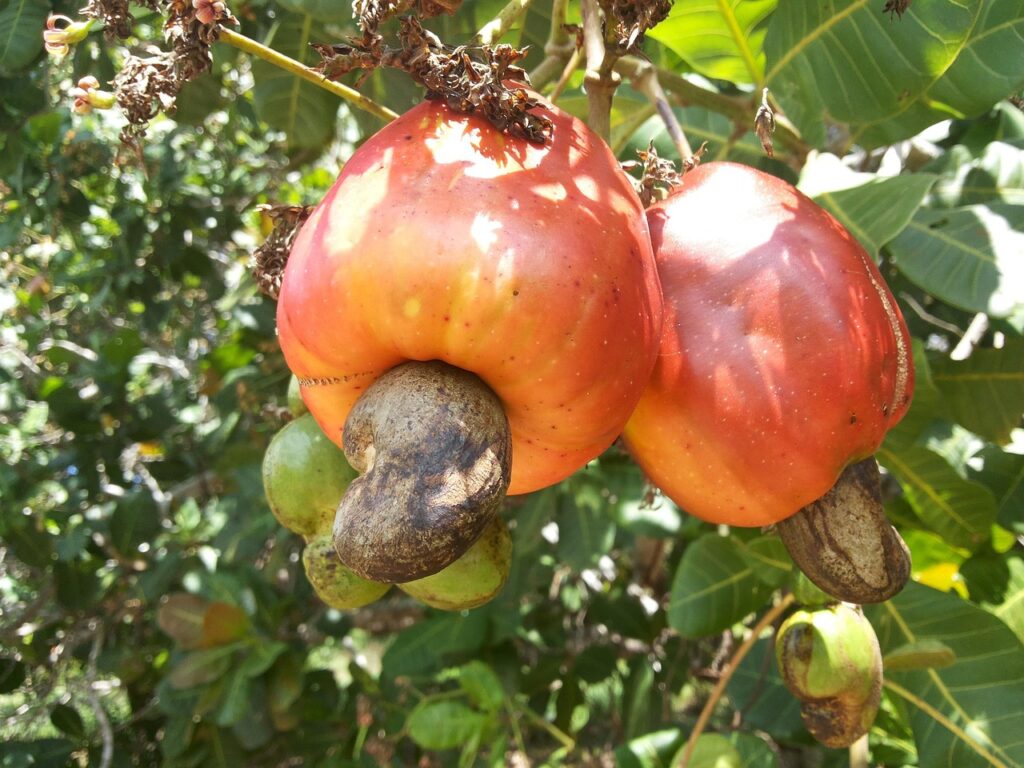
Raw cashew nuts (RCN) are harvested seasonally across West Africa and parts of Asia and Latin America.
-
RCN is traded internationally and routed toward processing capacity.
-
Processing is the key choke point because shelling, peeling, drying, grading, and packing are labour and capital intensive.
-
Kernels are sold by grade mix into consumer and industrial channels, where W320 is often the benchmark reference.
Two details matter in 2026.
First, seasonality is still a pricing feature, not a footnote. APEDA’s crop calendar highlights that cashew prices typically peak during the lean season, roughly July to October, when availability is lower. (APEDA 2025).
Second, the market increasingly prices processing and execution risk rather than just farm output. When processors face weak margin conditions, forward offers can become scarce and prompt availability tightens. (APEDA 2025).
Acreage expansion helps, but it is uneven
On the supply side, the headline story is modest expansion.
APEDA notes that global cashew acreage is projected to rise by about 2 to 3 percent, led by expansions in West Africa and Southeast Asia. (APEDA 2025).
At the same time, APEDA flags that some origins, including India, Brazil, and Indonesia, face stagnation or slight declines in acreage due to structural constraints such as ageing plantations, urbanisation, and climate stress. (APEDA 2025).
The implication for buyers is straightforward: supply can look comfortable in aggregate, while certain windows, origins, or grades remain tight.
More processing at origin, especially in Côte d’Ivoire
The most important medium-term change in the cashew market is the gradual rise of origin processing in West Africa.
World Bank reporting highlights that domestic cashew processing capacity in Côte d’Ivoire increased from 68,515 tons in 2015 to 350,000 tons in 2024, supported by investment and industrial zones. (World Bank 2025).
APEDA also expects Côte d’Ivoire’s cashew exports to rise materially, linked to higher production and continued improvements in domestic processing. (APEDA 2025).
For buyers, this matters because origin processing can change the market in two ways:
-
It can reduce the amount of raw nuts shipped long-distance for some volumes over time.
-
It can increase competition for raw material between local processors and traditional processing hubs.
Neither change happens overnight, but both influence price formation and trade flow resilience in 2026.
Vietnam and India still set the tone for kernels
Even with origin processing growth, large-scale throughput remains heavily influenced by Asia.
APEDA’s October 2025 dashboard notes that Vietnam’s exports in 2025 were driven more by value than volume, with January to August exports roughly flat to slightly down in volume while export value rose due to higher average prices. (APEDA 2025).
Vietnam’s export targets also underscore continued ambition and the importance of stable supply lines into processing. (VietnamPlus 2025).
From a buyer’s perspective, this reinforces a key point for 2026: kernel availability is tightly linked to processors’ ability to secure raw material at workable margins, not simply to the size of the crop. (APEDA 2025).
W320 cashew price dynamics in 2026: why “oversupply” can still feel tight
W320 is often treated as the benchmark grade, but its pricing is best understood as the result of several drivers that do not always move in the same direction:
-
Seasonality and lean-month tightening. (APEDA 2025).
-
Raw nut landing costs and the timing of arrivals into processors.
-
Processing margin pressure, which affects willingness to sell forward and how quickly offers update. (APEDA 2025).
-
Freight, transit time, and financing costs, which can widen the gap between headline levels and delivered levels.
-
Demand mix and grade spreads, where shifts toward pieces or smaller whole grades can tighten specific segments even if overall supply improves.
APEDA’s dashboards show how pricing can firm during tighter seasonal windows and soften when supply pressures ease. (APEDA 2025).
Procurement planning in 2026: two scenarios, one principle
Rather than betting on a single forecast, many buyers structure procurement around two scenarios and keep optionality.
Scenario A: Prices ease further
If arrivals are smooth, processors maintain throughput, and demand remains steady, prices can soften. In that environment, buyers often focus on staged coverage and keeping the ability to reprice supply as the market resets.
Scenario B: Prices rebound sharply
If processors slow due to margin pressure, logistics tighten, or trade routes shift unexpectedly, prices can rebound. In that environment, buyers often prioritise continuity, prompt shipment access, and having approved alternatives across grades and delivery structures.
This is not a recommendation to transact. It is a practical framework for managing supply and cost variability in a market where conditions can change faster than a typical purchasing cycle.
What HRT Foods can do for you in 2026
If you buy cashew kernels in Europe, the practical question is not only “where is the market going,” but “who can supply what I need when the market shifts.” This is where HRT Foods is designed to perform.
We can support you with:
-
Regular supply programs or opportunistic spot coverage, depending on your purchasing model
-
Flexible grade and quality options (whole grades, splits, pieces) aligned to your price point and application
-
Fast offer updates when market levels move, including alternative structures when availability tightens
-
Flexible volumes and logistics setups, tailored to your destination and timeline
-
Competitive pricing, supported by active sourcing and quick adaptation to new market conditions
If you want, send your target grades, volume range, and delivery destination, and we will reply with an offer and availability overview based on current market conditions. This is a commercial quotation discussion, not a forecast exercise.
Disclaimer
This article is provided for general information and procurement planning in the food industry only. It does not constitute investment advice, financial advice, legal advice, or a recommendation to buy, sell, or hold any financial instrument, commodity position, or to enter into any specific transaction. Nothing in this article should be relied upon as a substitute for your own assessment, due diligence, or professional advice.
All market views and forward-looking statements are opinions as of the publication date and may change without notice. Information is provided “as is” without any representation or warranty as to completeness or accuracy, and HRT Global Sp. z o.o. accepts no responsibility or liability for any decisions made based on this content. (ESMA 2023).
HRT Foods (HRT Global Sp. z o.o.) supplies nuts and may have a commercial interest in products discussed. Any supply, pricing, specifications, and delivery terms are subject to separate written quotation and contractual agreement.
Sources
-
APEDA. “MIC Monthly Dashboard: Cashew (15 Dec 2025).” https://apeda.gov.in/sites/default/files/2025-12/MIC_Monthly_dashboard_Cashew_15122025.pdf
-
APEDA. “MIC Monthly Dashboard: Cashew (30 Oct 2025).” https://apeda.gov.in/sites/default/files/2025-10/MIC_Monthly_dashboard_Cashew_30102025.pdf
-
World Bank. “Agri-processing adds value in Côte d’Ivoire’s cashew industry.” https://projects.worldbank.org/en/results/2025/04/15/agri-processing-adds-value-in-cote-d-ivoire-s-cashew-industry
-
Reuters. “Ivory Coast raises projected cashew output as threatened tariffs hit exports.” https://www.reuters.com/world/africa/ivory-coast-raises-projected-cashew-output-threatened-tariffs-hit-exports-2025-05-07/
-
VietnamPlus. “Vietnam targets 4.5 billion USD in cashew exports for 2025.” https://en.vietnamplus.vn/vietnam-targets-45-billion-usd-in-cashew-exports-for-2025-post322708.vnp