
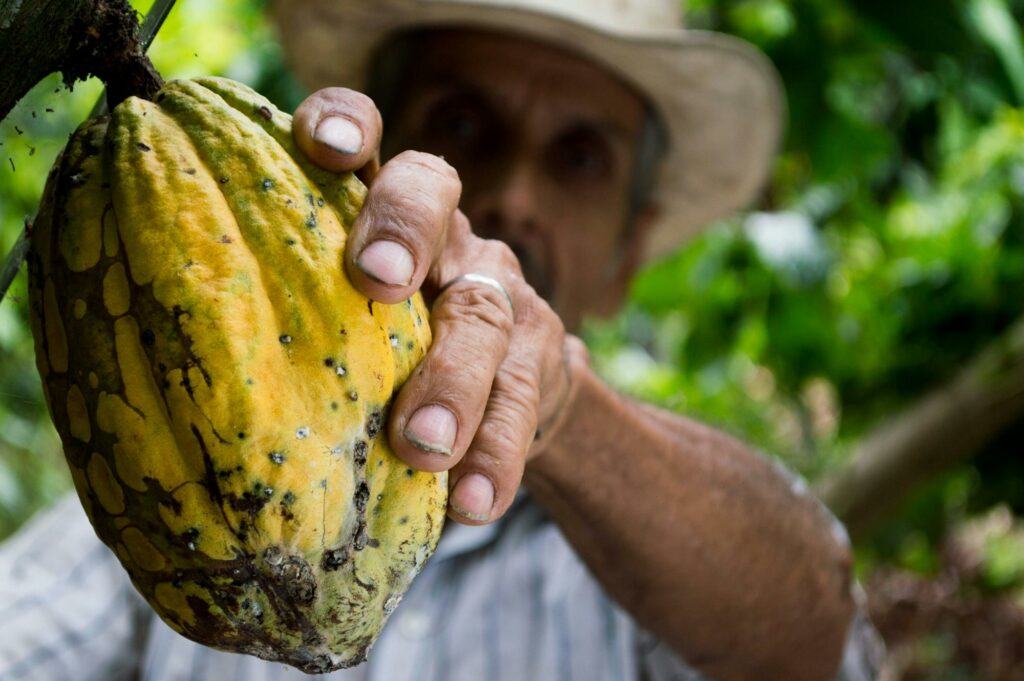
If you work with chocolate, cocoa powder, or cocoa butter, 2026 is shaping up to be a year of uncomfortable good news. The raw material panic that defined 2024 and parts of 2025 has eased, but the industry is not snapping back to “business as usual.” The supply chain has changed, formulations have changed, and consumers have changed. Even with cocoa prices off the highs, retail reality will lag, and the next shock can arrive quickly.
Here is the outlook that matters for manufacturers, brands, and ingredient buyers in 2026.
Cocoa prices are no longer “out of control,” but they are still structurally high
Cocoa was among the biggest commodity losers of 2025 after the prior year’s extraordinary rally. Reuters notes cocoa fell 48% in 2025, as the earlier spike reduced demand while supplies improved. (Thukral and Liew)
That decline is meaningful, but it does not mean cocoa is cheap. Saxo’s commodity strategy work put the post-slump level in context: cocoa around USD 5,000 per tonne is still expensive by historical standards, even if it is far more manageable than the crisis prints above USD 12,000. (Hansen)
For 2026 planning, the key is not a precise number but a regime shift: volatility can calm without returning to the old price floor. That matters because chocolate is priced on a longer cycle than most consumers realize. Product planning, hedging, and contract coverage create a slow transmission mechanism from bean to shelf.
Demand damage is real, and it is influencing 2026 behaviour
The industry’s 2024–2025 response was not subtle: raise prices, shrink pack sizes, and reduce cocoa intensity where possible. Those choices protected margins, but they also trained consumers to buy differently.
ING’s commodities research points to a clear demand response. It cites a 6.7% decline in global grindings across the first three quarters of 2025, and expects demand to remain broadly flat into 2025/26. (Patterson)
This matters for 2026 because “volume elasticity” is now a board-level topic. Chocolate is not discretionary for everyone, but premium formats and impulse-heavy SKUs are. If household budgets remain tight in key EU markets, the recovery in grindings may be slower than producers hope.
Supply is improving, but the supply base is still fragile
The market does not need perfect crops to move lower; it needs crops that are “less bad” than feared, plus a buyer side that is cautious. Several signals point to improved availability versus the tightest period.
ICCO’s October 2025 market report describes cocoa prices declining during the start of the 2025/26 season and notes weaker demand weighing on prices, with Asia showing the sharpest drop in Q3 2025 grindings. (International Cocoa Organization)
ING goes further and frames a plausible surplus. It forecasts a 175,000-tonne surplus for 2025/26, after a deficit year, driven by improved supply. (Patterson)
Still, the underlying agronomy does not magically fix itself. Cocoa trees take years to reach meaningful yields, and West Africa remains exposed to weather risk, disease pressure, and ageing trees. (Patterson) The correct procurement mindset for 2026 is “more balanced, not safe.”
Retail prices will stay sticky, even if cocoa eases
The mistake many buyers made in 2025 was assuming that falling cocoa would quickly translate into cheaper finished goods. That is not how confectionery pricing works.
Saxo’s analysis makes the timing point directly: the cocoa slump came too late to influence holiday products already produced and priced months earlier, and the benefit may only show up in later seasonal cycles such as 2026 Easter ranges. (Hansen)
There is also a more structural reason prices stay high: reformulation and “shrinkflation” rarely reverse immediately. Once a brand learns that consumers accept a lighter bar or a slightly different fat balance, switching back requires either sustained cost relief or competitive pressure, and neither is guaranteed in 2026. (Hansen)
Practical implication: expect continued tension between buyer expectations (“beans are cheaper”) and seller realities (inventory timing, hedges, and re-engineered recipes).
Regulation remains a supply-chain cost driver, even with delays
Europe’s deforestation-linked compliance requirements are not going away. They are becoming part of the cost base, even if the timeline shifts.
In December 2025, the European Parliament announced it had adopted changes delaying the EU Deforestation Regulation (EUDR) by one year, to 30 December 2026 for large operators and 30 June 2027 for micro and small enterprises. (European Parliament)
For 2026, that delay reduces the risk of sudden border friction, but it does not remove the work. Traceability, geolocation data, supplier mapping, and document governance will increasingly show up in supplier selection, pricing discussions, and audit clauses.
6) What to watch in 2026: five indicators that actually move your P&L
If you are writing procurement plans, customer updates, or sales positioning, focus on a short list of indicators your audience can connect to outcomes:
-
Grinding data by region (Europe, North America, Asia): the clearest demand proxy, and a leading signal for whether high prices are still suppressing consumption. (International Cocoa Organization; Patterson)
-
West African mid-crop and main-crop quality: volume without quality still constrains usable supply and shifts premiums. (International Cocoa Organization)
-
Forward curve structure: contango versus backwardation is a quick “stress gauge” for nearby scarcity. (Hansen)
-
Brand reformulation pace: if cocoa content stays lower, demand may not rebound as quickly, capping the upside. (Hansen)
-
EUDR readiness of key origins: compliance capability becomes a competitive advantage, not just a legal box. (European Parliament)